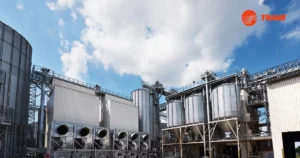
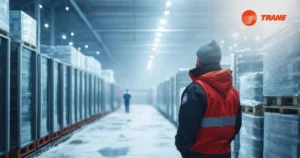
Comfort Cooling is no longer simply a convenience for modern buildings. It has become a critical operational requirement for organisations managing offices, healthcare facilities, hotels, retail environments, and industrial spaces. When indoor temperatures fluctuate or cooling systems fail, the impact can be immediate, affecting productivity, equipment reliability, and occupant safety. Trane provides engineered cooling solutions designed to help organisations maintain stable indoor conditions while supporting operational efficiency and long-term system reliability.
For facility managers and operational leaders, the challenge today is not simply installing a cooling system. It is ensuring that cooling infrastructure remains adaptable, reliable, and capable of supporting evolving building demands.
Why Cooling Systems Must Be Designed for Real Operational Conditions
Cooling demand in buildings rarely remains constant. Occupancy levels change, equipment loads increase, and outdoor temperatures fluctuate significantly across seasons.
For example, a commercial building designed for typical office use may experience cooling stress when:
- occupancy increases due to business growth
- additional servers or IT infrastructure are installed
- building renovations change airflow patterns
- extreme weather pushes cooling demand beyond design limits
When cooling infrastructure cannot adapt to these changes, indoor temperatures begin to rise and operational performance suffers.
Reliable cooling strategies therefore require systems designed for flexibility, scalability, and real-world operating conditions, not just theoretical building models.
Cooling Failures Are More Common Than Many Organisations Expect
Cooling disruptions can have serious operational consequences. According to the U.S. Department of Energy, HVAC system problems account for a significant portion of building maintenance issues and can lead to energy waste and performance losses if systems are not properly designed and maintained.
Source: https://www.energy.gov/energysaver/maintaining-your-air-conditioner
How Trane Designs Effective Comfort Cooling Solutions
Trane’s approach to cooling focuses on combining high-performance equipment with intelligent system design.
Rather than delivering equipment in isolation, Trane evaluates the entire building environment, including heat loads, airflow requirements, occupancy patterns, and future capacity needs.
Key Trane cooling technologies include:
High-Efficiency Chiller Systems
Trane air cooled and water-cooled chillers provide reliable centralised cooling for large buildings and facilities. These systems are designed for stable performance even under fluctuating load conditions.
Advanced Air Handling Systems
Air handling units help distribute cooled air efficiently throughout buildings while maintaining proper ventilation and air quality.
Smart System Controls
Modern building management systems allow facility managers to monitor and optimise cooling performance in real time, improving efficiency and reducing operational costs.
Scalable Cooling Infrastructure
Trane cooling systems can be configured to allow future expansion, enabling organisations to increase capacity without redesigning their entire HVAC infrastructure.
This systems-based approach helps organisations maintain comfort while improving long-term reliability.
Practical Cooling Challenges Facilities Face
Facility managers regularly encounter situations where cooling demand changes unexpectedly.
Some common examples include:
Peak Summer Demand
During periods of extreme heat, buildings often experience higher cooling loads than originally anticipated. Cooling infrastructure must be able to maintain stable conditions during these peak periods.
Building Expansion
When organisations add new office space, production lines, or IT equipment, cooling demand increases. Without proper planning, existing systems may become overloaded.
Equipment Heat Loads
Modern buildings contain large amounts of electronic equipment that generate heat continuously. Cooling systems must remove this heat efficiently to prevent overheating.
Mixed-Use Facilities
Many buildings today combine office space, retail areas, and data infrastructure. Each of these environments has different cooling requirements.
Trane solutions are designed to handle these diverse demands through flexible system design and advanced controls.
Energy Efficiency Is Now a Core Cooling Requirement
Cooling systems represent a major portion of building energy consumption. As organisations work toward sustainability goals, improving cooling efficiency has become a priority.
Modern Trane systems incorporate features that help reduce energy consumption without sacrificing performance, including:
- variable speed compressors that adjust to demand
- advanced heat exchanger technology
- intelligent control algorithms that optimise system operation
These technologies allow facilities to maintain consistent indoor conditions while managing operational costs more effectively.
Energy-efficient cooling infrastructure also supports broader corporate sustainability initiatives.
Cooling Systems Must Also Protect Equipment and Infrastructure
In addition to maintaining comfort, cooling systems play an important role in protecting equipment.
Servers, medical devices, manufacturing machinery, and laboratory equipment all generate heat during operation. Without proper cooling, these systems can overheat and experience reduced performance or unexpected shutdowns.
Reliable cooling infrastructure therefore supports both human comfort and equipment protection, making it essential for many modern operations.
Service and Lifecycle Support Are Critical for Cooling Performance
Even the best cooling equipment cannot perform reliably without proper service support.
Over time, system components experience wear, airflow patterns change, and operational conditions evolve. Regular maintenance ensures that cooling systems continue to perform efficiently and reliably.
Trane provides lifecycle support services that help organisations:
- maintain system efficiency
- reduce the risk of unexpected failures
- extend equipment lifespan
- optimise cooling performance over time
This service capability is an essential part of Trane’s value proposition.
Planning Cooling Infrastructure for the Future
Organisations are increasingly evaluating cooling infrastructure as part of broader operational planning.
Key considerations include:
- how cooling demand may increase over time
- how buildings can integrate smarter control systems
- how energy efficiency can be improved
- how cooling systems can adapt to future climate conditions
Trane helps organisations plan cooling strategies that remain effective as buildings evolve and operational requirements change.
Cooling for Industrial and Production Environments
While many buildings require cooling primarily for occupant comfort, industrial environments often require cooling for production processes.
Manufacturing plants, food processing facilities, and chemical production environments rely on precise temperature control to maintain product quality and operational consistency.
In these environments, cooling systems must be capable of delivering consistent temperature regulation under demanding operating conditions.
Conclusion
Maintaining reliable indoor environments is essential for organisations operating modern facilities. Trane provides advanced solutions designed to deliver Comfort Cooling, helping organisations maintain stable indoor temperatures, protect equipment, and support productive working environments.
In industries where temperature stability directly influences manufacturing or operational processes, these systems can be complemented by specialised Process Cooling, ensuring both facility performance and operational reliability across a wide range of applications.