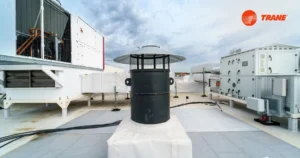
In many industries, cooling demand does not always follow predictable patterns. Seasonal peaks, unexpected system failures, construction projects, and facility expansions can quickly create gaps between cooling demand and installed capacity. Temporary chiller rental has therefore become an essential strategy for organisations that need rapid, reliable cooling without committing to permanent infrastructure before it is necessary. Trane supports businesses around the world with flexible cooling solutions that stabilise operations and protect critical environments during periods of change.
Temporary cooling solutions allow organisations to maintain operational continuity while longer-term decisions about infrastructure upgrades, maintenance, or capacity expansion are carefully evaluated.
Why Cooling Flexibility Matters in Modern Operations
Cooling systems are central to many modern facilities. From commercial buildings and hospitals to manufacturing plants and data infrastructure, stable temperatures are critical to safety, productivity, and equipment performance.
However, cooling requirements often fluctuate due to factors such as increased occupancy, new equipment installations, or temporary operational demands. Permanent systems are typically designed for average load conditions, not sudden spikes.
Temporary cooling solutions help bridge these gaps. They provide the ability to deploy additional capacity quickly and maintain environmental control without long installation timelines.
Global Cooling Demand Is Increasing
Cooling demand worldwide continues to rise as urbanisation, economic development, and climate change increase the need for temperature control.
According to the International Energy Agency, space cooling currently accounts for around 10 percent of global electricity consumption, and demand is expected to grow significantly as temperatures rise and building stock expands.
Source: https://www.iea.org/reports/the-future-of-cooling
This growing demand places pressure on existing cooling infrastructure. Flexible cooling strategies help organisations adapt without compromising operational stability.
When Temporary Chillers Become Essential
Temporary chillers are frequently used in situations where permanent systems are unavailable or temporarily insufficient.
Common scenarios include:
Planned Maintenance and Equipment Upgrades
Cooling systems require periodic maintenance and modernisation. Temporary chillers allow facilities to remain operational while permanent systems are serviced or replaced.
Emergency System Failures
Unexpected equipment failures can quickly disrupt operations. Temporary systems restore cooling capacity while repairs are completed.
Construction and Commissioning Phases
During construction or expansion projects, permanent cooling infrastructure may not yet be fully operational. Temporary cooling supports occupancy and equipment testing during these transitional phases.
Seasonal Demand Peaks
Some facilities experience seasonal surges in cooling demand. Temporary systems provide additional capacity during peak periods without requiring permanent over-sizing of infrastructure.
How Trane Supports Temporary Cooling Deployments
Trane approaches temporary cooling with the same engineering discipline used in permanent installations. Rental solutions are configured to match the specific requirements of each facility, including load characteristics, environmental conditions, and installation timelines.
Key elements of Trane’s temporary cooling approach include:
- Rapid equipment deployment to support urgent needs
- System configurations designed for reliable operation
- Scalable capacity to match changing demand
- Integration with existing building systems where required
- Technical expertise throughout the deployment process
This ensures temporary systems operate safely and efficiently while supporting ongoing operations.
Supporting Critical Facilities
Certain facilities require uninterrupted temperature control. Hospitals, manufacturing plants, laboratories, and logistics centres depend on consistent cooling to protect equipment, processes, and stored goods.
Temporary chiller deployments help safeguard these environments when cooling infrastructure is under maintenance or facing unexpected challenges. By maintaining stable temperatures, organisations avoid operational disruptions that could affect safety, compliance, or productivity.
Financial and Operational Advantages
Temporary cooling also offers financial advantages. Instead of investing in permanent systems sized for rare peak demand, organisations can use temporary equipment when additional capacity is required.
This approach helps organisations:
- Manage capital expenditure more effectively
- Reduce the risk of oversizing permanent infrastructure
- Maintain operational flexibility during growth or transition
- Align cooling capacity with real operational demand
Rental solutions therefore support both operational resilience and smarter long-term investment planning.
Integrating Temporary Cooling into Long-Term Strategies
Temporary cooling solutions are most effective when they are integrated into a broader facility management strategy. Organisations increasingly include temporary systems in contingency planning to ensure they can respond quickly to unexpected events.
This proactive approach reduces downtime, improves reliability, and ensures facilities can adapt to changing operational requirements.
Trane works with organisations to evaluate cooling needs and design solutions that support both immediate operational stability and long-term infrastructure planning.
Expanding Temperature Control Beyond Buildings
Cooling needs are not limited to indoor environments. Many industries require temperature-controlled storage and transport to maintain product integrity.
Food distribution networks, pharmaceutical supply chains, and agricultural operations rely on stable temperature conditions to protect sensitive goods throughout the logistics process.
Temporary cooling solutions can therefore support both facility cooling and temperature-controlled storage strategies.
Conclusion
Cooling flexibility is becoming a key component of operational resilience across industries worldwide. Trane provides temporary chiller rental solutions that help organisations stabilise environments, protect equipment, and maintain productivity when cooling demands change unexpectedly.
For organisations that also require temperature-controlled storage capacity, these cooling strategies can be complemented with cold storage rental, helping ensure that products remain protected and supply chains remain reliable even during periods of operational transition.